From One Lateral X-Ray to a Simulated Spine Surgery.
An infinite biomechanics program team for surgical R&D. Autonomous multi-physics routing across finite element stress and musculoskeletal loading in seconds.
X-Ray in,
Finite Element &
MSK out.
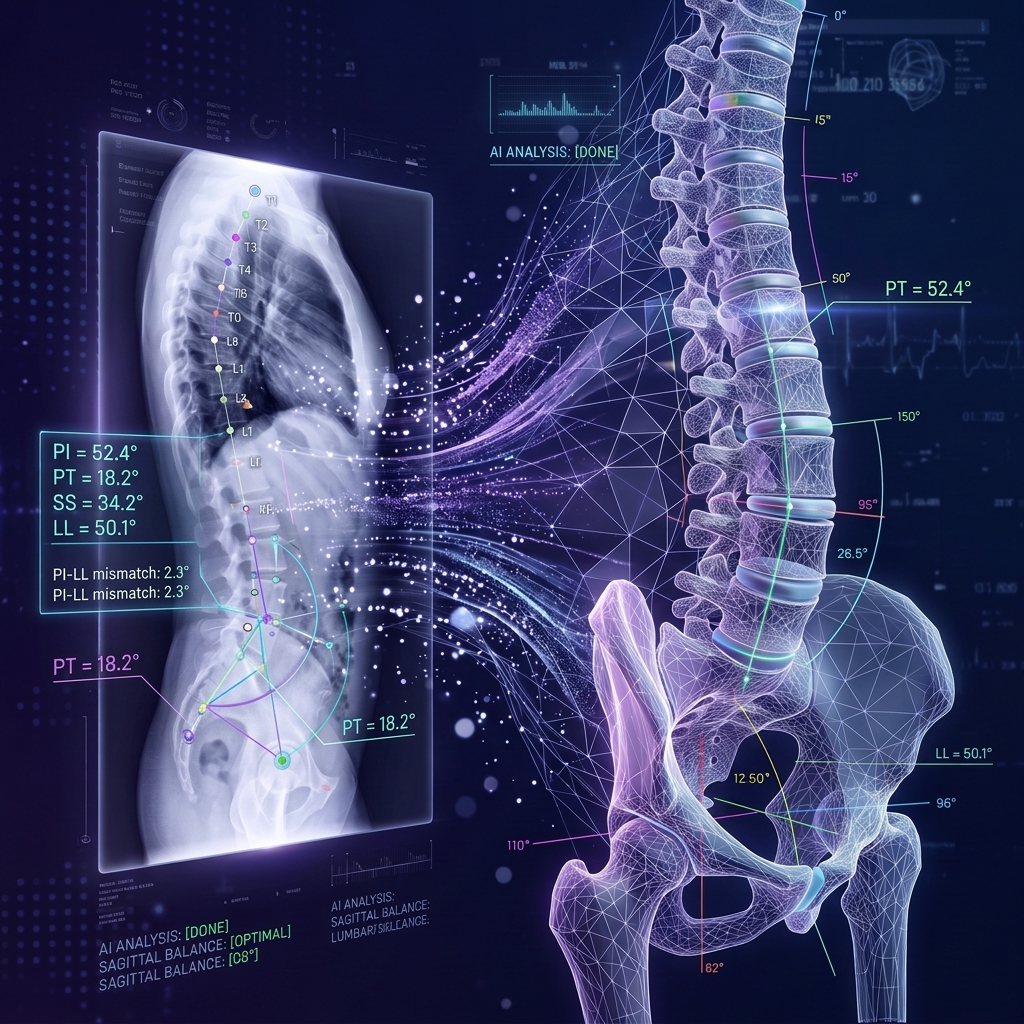
X-Ray Sagittal Analysis
Automated landmark localization and spinopelvic sagittal parameter calculation from a single lateral radiograph.
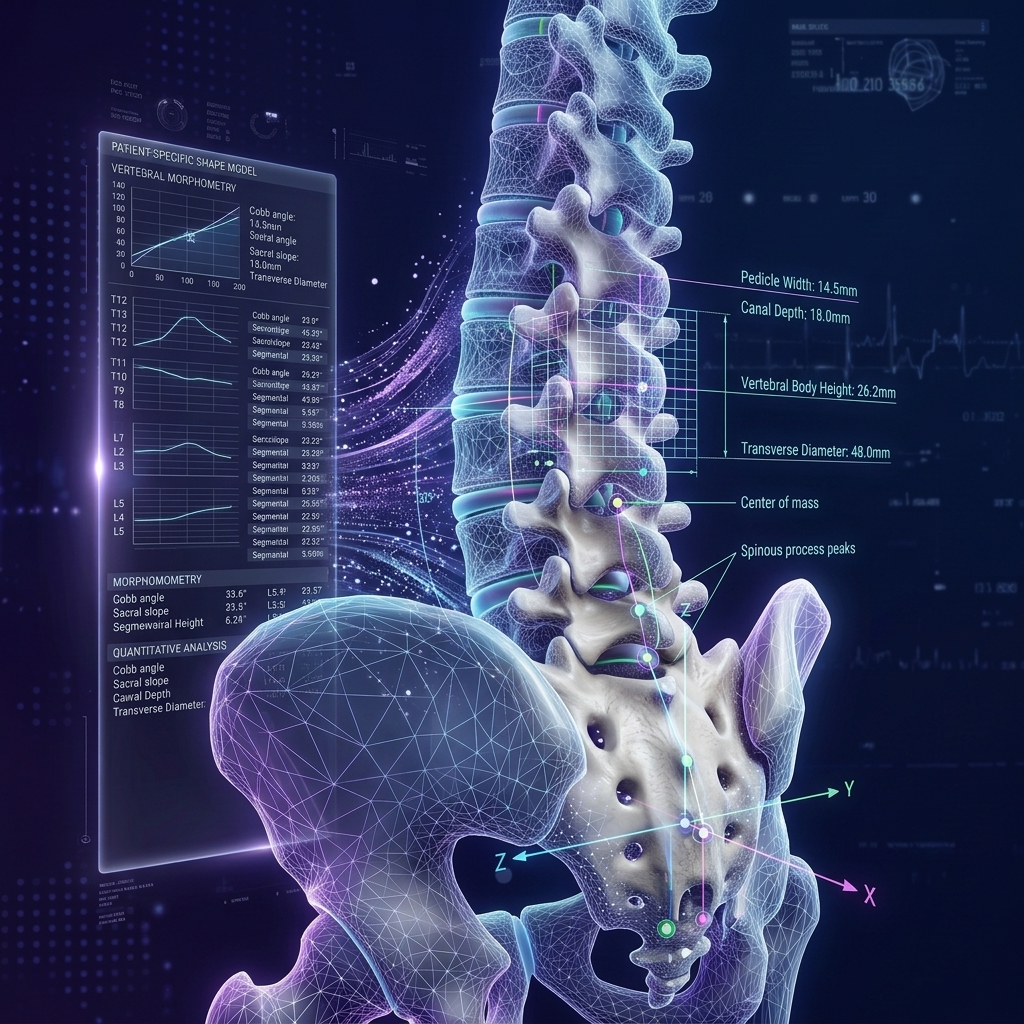
3D Spine Shape Model
Reconstructing patient-specific 3D spine shape models and vertebral morphometry from planar imaging.
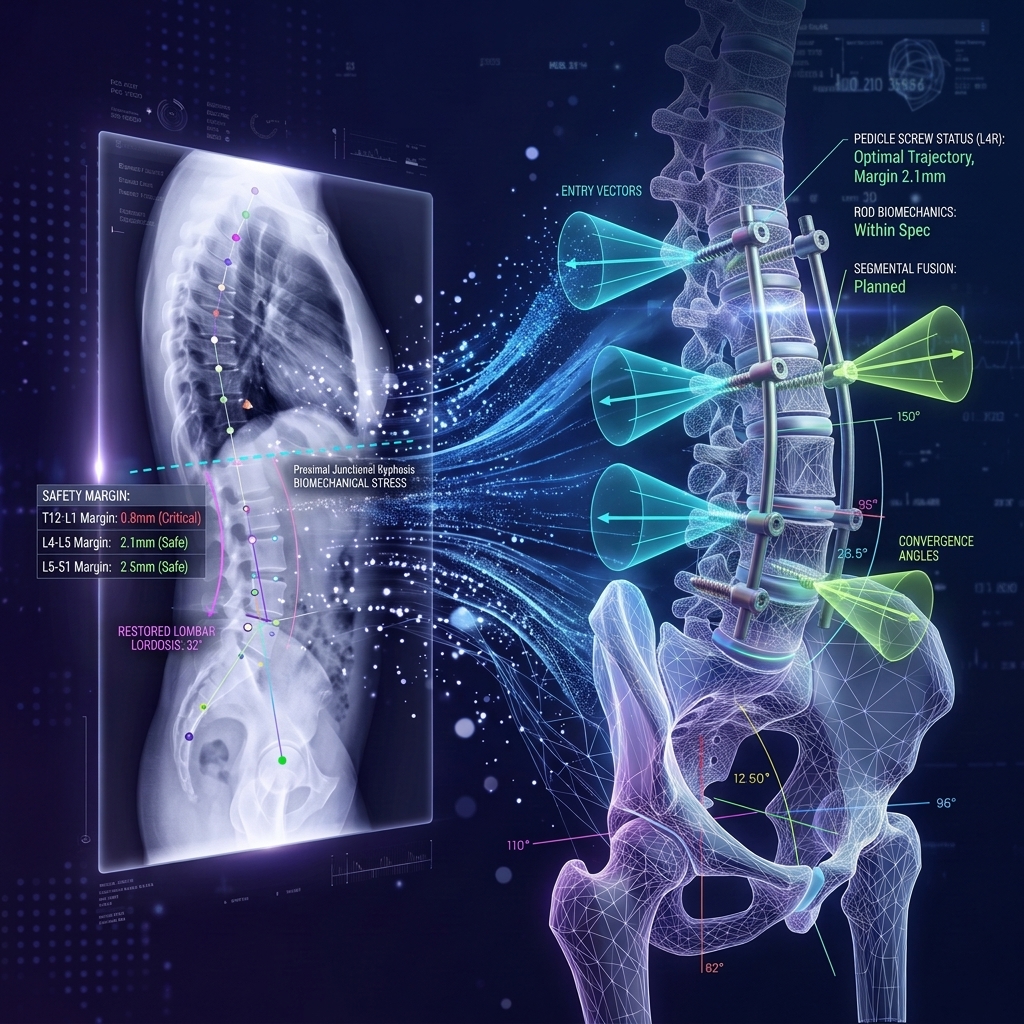
Plan + Screws Construct
Patient-specific pedicle screw trajectory optimization, lordosis restoration, and PJK risk mitigation.
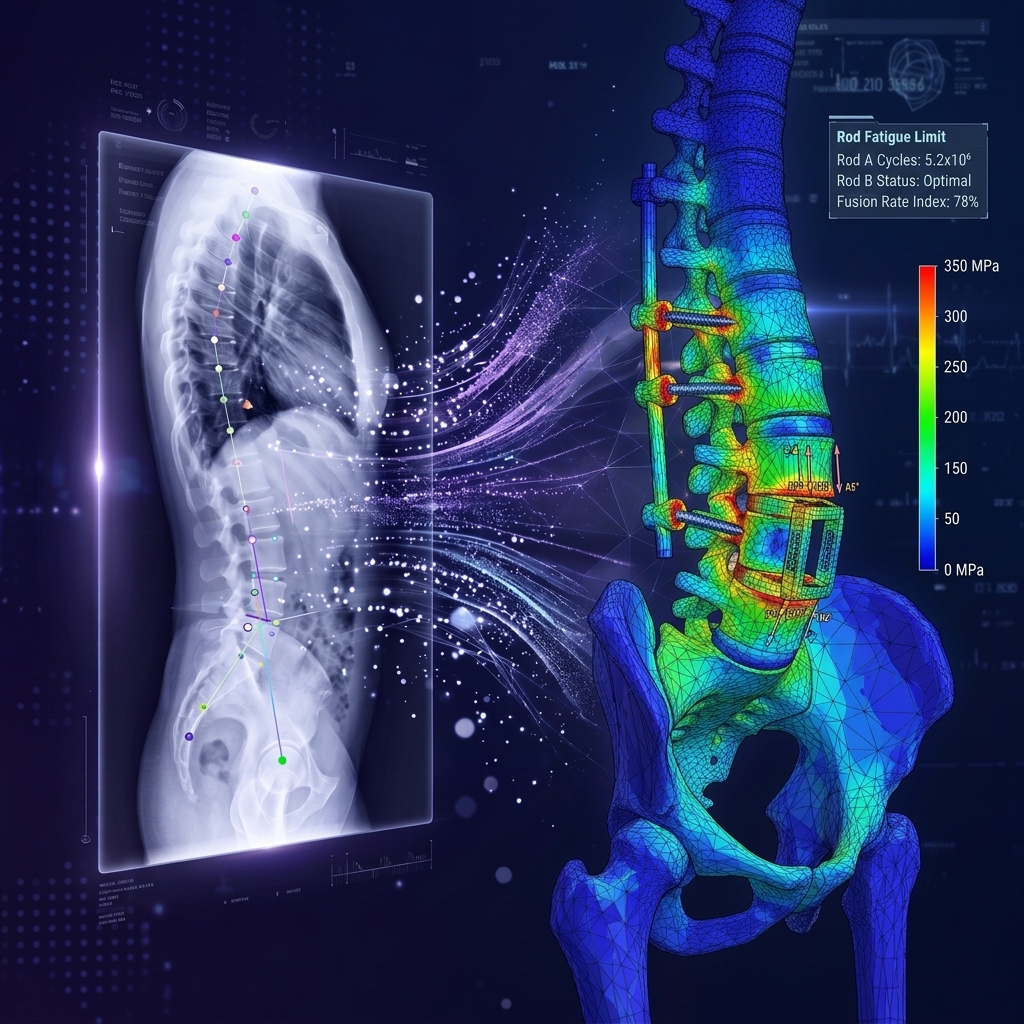
Finite Element Stress
Autonomous FEBio multi-physics routing to evaluate anterior column load sharing and rod fatigue limits.
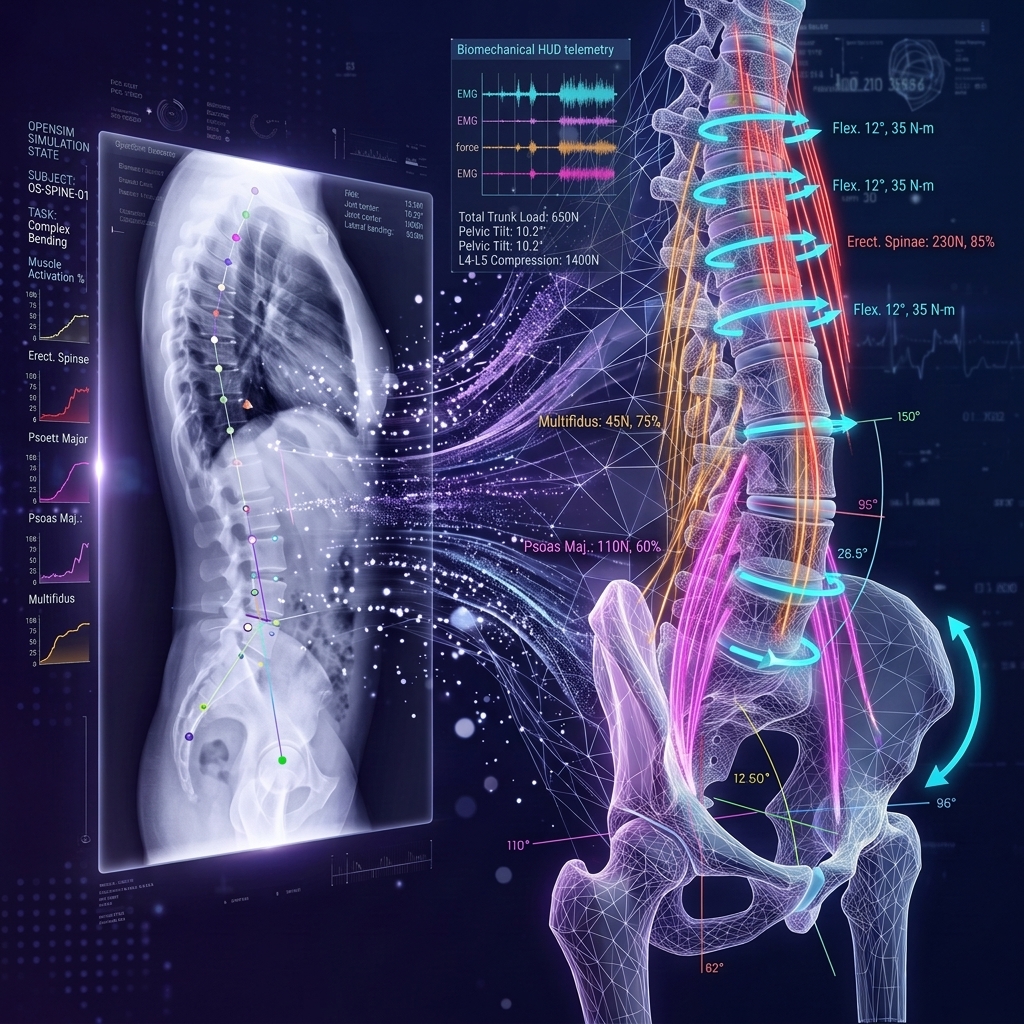
Musculoskeletal Dynamics
Coupled OpenSim dynamic simulation tracking multi-level spine kinematics under physiological daily loads.
X-Ray Sagittal Analysis
Automated landmark localization and spinopelvic sagittal parameter calculation from a single lateral radiograph.
3D Spine Shape Model
Reconstructing patient-specific 3D spine shape models and vertebral morphometry from planar imaging.
Plan + Screws Construct
Patient-specific pedicle screw trajectory optimization, lordosis restoration, and PJK risk mitigation.
Finite Element Stress
Autonomous FEBio multi-physics routing to evaluate anterior column load sharing and rod fatigue limits.
Musculoskeletal Dynamics
Coupled OpenSim dynamic simulation tracking multi-level spine kinematics under physiological daily loads.
Features. The Spine Suite difference.
X-ray. Lateral view.
Calibrated lateral radiograph ingestion with automated scaling.
Landmark detection. YOLO model trained on 300 manually labeled images.
FE analysis. T1–S1 non-linear spine finite element model.
Patient-specific multi-physics simulation calibrated to physiological boundary conditions.
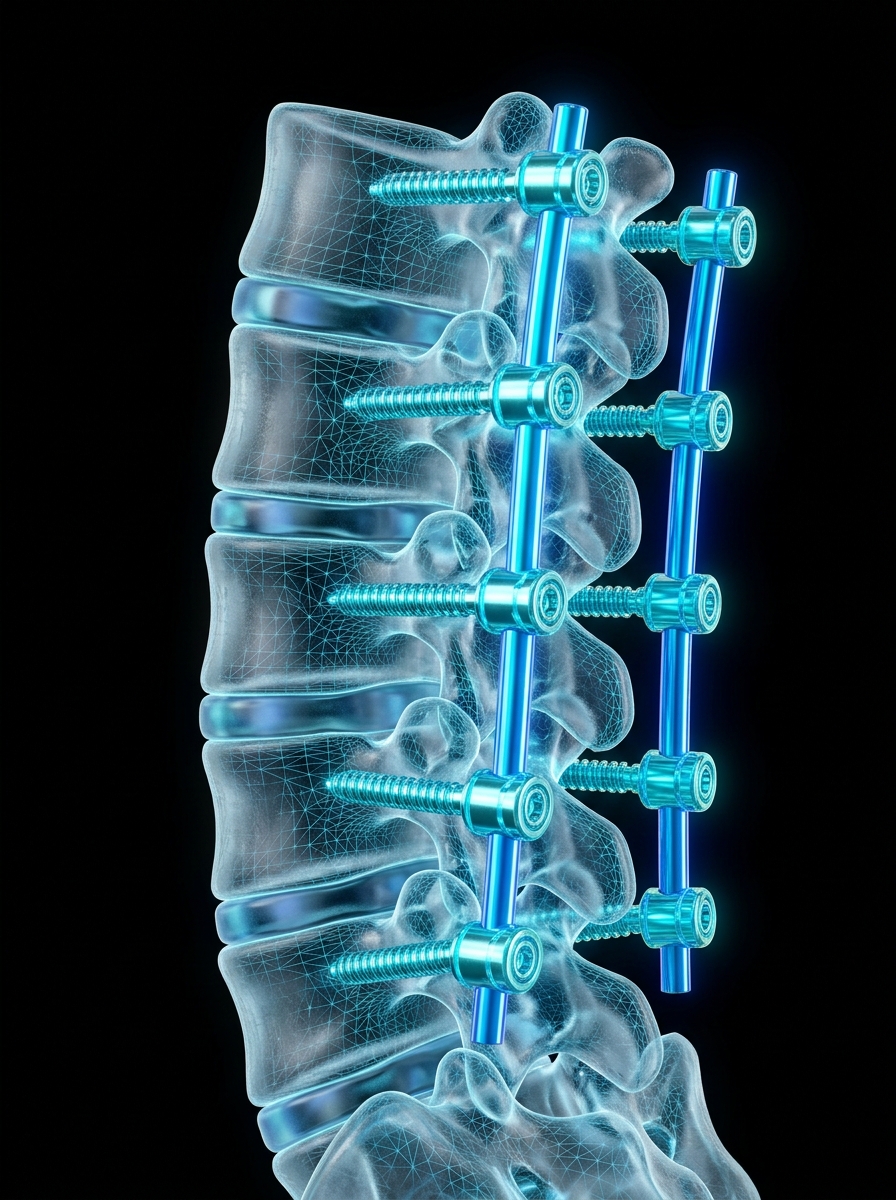
3D visualization. Interactive vertebrae, fixation rods, and stress.
Interactive vertebrae, fixation rods, screws, stress and displacement.
Agentic AI interface. Automates surgical planning and clinical reports.
Automates surgical planning, generates clinical reports and supports case investigation.
Fixation rod design. Patient-specific multi-planar curvature.
Patient-specific rods with optimized multi-planar curvature.
PJK risk estimation. Machine learning prediction.
Predicts proximal junctional kyphosis risk with machine learning.
Alignment. Spino-pelvic parameters.
Real-time pelvic incidence, lumbar lordosis, and sagittal balance calculations.
Planning score. Biomechanical safety verification.
Verifies the plan's biomechanical safety and alignment.
Musculoskeletal model. Thoracolumbar dynamics.
Thoracolumbar model, 500+ muscles, 51 DoF.